
What We Learned at NAMICon 2026
Reflections from the Doro Mind team on four themes that stayed with us after NAMICon 2026 in Atlanta — lived experience as a change agent, the power of seeing recovery in person, the enormous burden on caregivers, and what it really takes to build a whole-team approach.
Doro Mind Team
Doro Mind · June 12, 2026
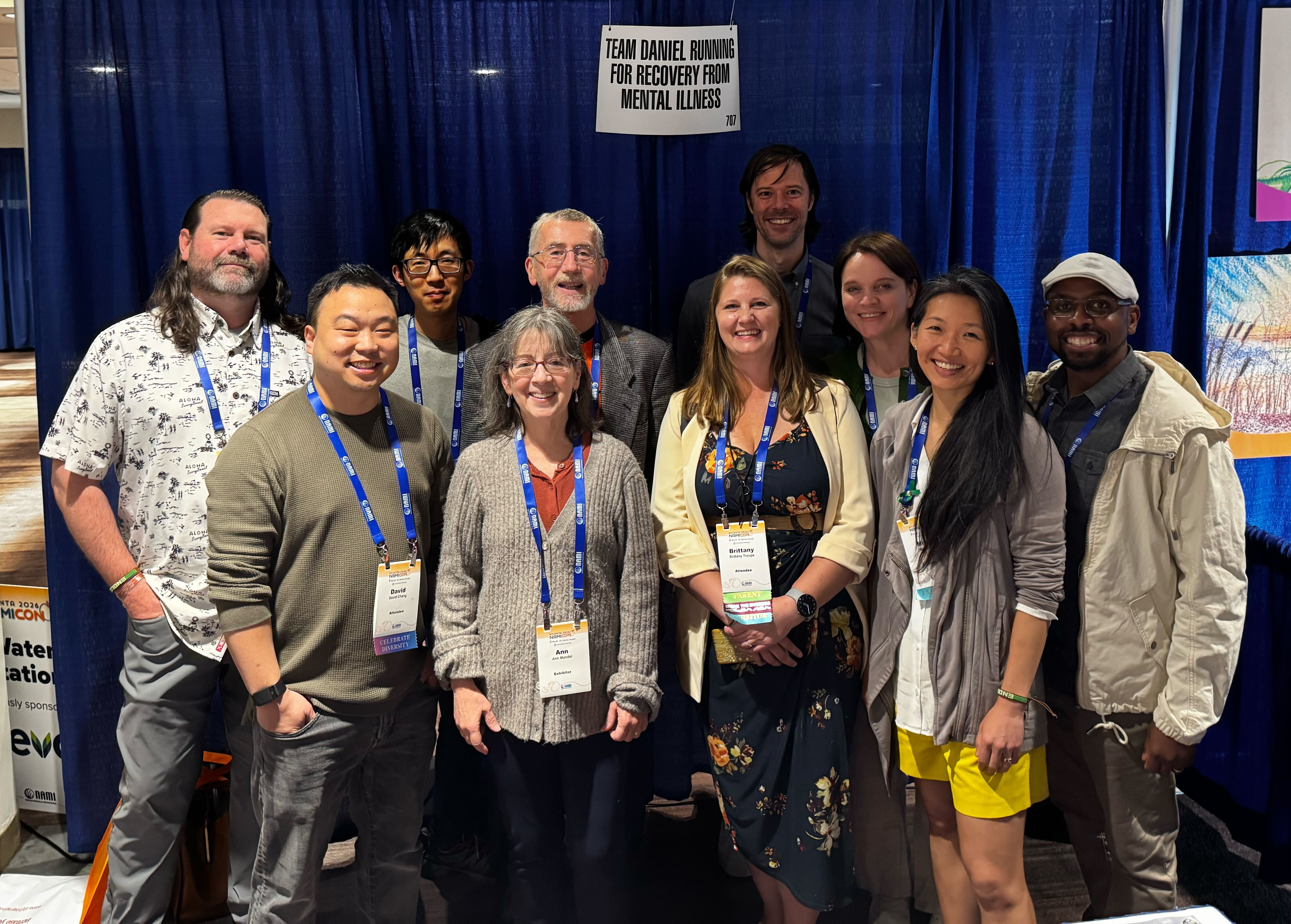
NAMICon is the National Alliance on Mental Illness's annual conference and one of the largest gatherings of mental health advocates, clinicians, families, and people with lived experience in the country. This year it was held in Atlanta, Georgia, May 28 to 30, and several members of the Doro Mind team made the trip.
Here is what we are still thinking about.
1. Lived experience is the most powerful change agent in the SMI space.
This came up independently in almost every session our team attended. Families and peer specialists sharing their experiences openly are moving the needle on access, stigma, and awareness in ways publications and policy alone cannot.
John MacKenzie attended NAMICon both as a Doro Mind team member and as president of his local NAMI chapter. He spent time connecting with families in ways nearly impossible to replicate remotely.
There were several families there simply because this is where they are finding hope. They paid to come to a multi-day national conference to get this level of care and hope.
For a team committed to closing the gap between what is possible in serious mental illness care and what most families actually receive, being in that room was both validating and motivating.
2. Meaningful recovery is possible, and seeing it in person is inspirational.
Patrick Menard, our Director of Business Development attending his first NAMICon, described one session that stood out: a mother and son sharing their recovery journey together.
If no one had told you he was impacted by SMI, you would not have known. It was extremely inspirational for the people in the room looking towards meaningful recovery, to see it in person.
For families still early in the journey, visibility matters. It is one thing to be told recovery is possible. It is another to see it for yourself.
Brady Richards, co-founder of Doro Mind, named what that means for the work ahead:
We actually know how to help people get better from this illness in the large majority of cases. That is exciting. And it gives us continued motivation for why Doro exists. There is an enormous space to create change here.
3. Caregivers are being asked to do an enormous job without nearly enough support.
Brittany Troupe, Lead Family Support Guide at Doro Mind, attended a session focused on caregiver support and came back thinking about this:
Families know a crisis is coming before a crisis is happening, and they are met with responses like, 'they are fine enough, they can stay home.' Families are left wondering how to respond to an impending crisis when the systems of care around them are saying 'you got this' without training or guiding them.
David Chang attended several sessions on caregiver strategies and came away thinking about psychiatric advance directives — legal documents available in 25 states allowing a person to document their treatment preferences while stable, so those preferences are on record if a crisis arises later.
You can get consent while someone is doing well, maybe at discharge. When they encounter a situation down the line where they are refusing treatment, you can refer back to these directives. It shortens the time to recovery.
The window when someone is stable is exactly when these conversations should happen. Too often, families and providers assume the planning can wait.
4. Recovery takes a whole team.
Clare Jibb, attending her first NAMICon, reflected on what the conference reinforced for her as a clinician.
It is not a single clinician, it is not just a family, it is not just the individual. It is really a whole team. There are resources and parts of that team people have discounted before, like peer mentorship or coaching, but these are so important for meeting a person where they are.
She also attended a session on federal mental health policy and came away with a clear concern: as the landscape shifts, more people risk falling through the cracks. The families most affected are those without a strong support network around them.
It re-emphasized the need to have community and a support system, so it is not left to individuals to navigate on their own.
The most sophisticated care model in the world still comes down to someone showing up.
We are glad to be part of a community of people committed to doing exactly that and we are grateful to have been in a room full of people who care as deeply as we do. Our time in Atlanta left us all motivated to continue to show up for both our Doro Mind members and our own loved ones affected by serious mental illness.
About the Author
Doro Mind Team
Doro Mind
Doro Mind is a mental health service provider partnering with families to treat schizophrenia, bipolar disorder, and related brain disorders through expert clinical care and compassionate support.
Related Reading
More on Company
Company
Fellow Travelers: Highlights from Our Conversation with Stephanie Greer
A recap of our conversation about what roughly 290 first calls with families taught Stephanie Greer, and the next chapter she is beginning as a family therapist.
READCompany
Doro Mind Receives NIH Grant to Address the Intersection of Substance Use and Serious Mental Illness
Doro Mind has been awarded a grant from the National Institutes of Health (NIH) to develop a digital platform targeting the relationship between substance use and serious mental illness.
READNeed support for your family?
Our team is here to help you navigate serious mental illness, with expert care and compassion.